The Runaway Review

Detailed reviews of battery chemistries and their advantages and disadvantages in the UPS industry.

Battery modules with blue and pink glow.


From the Lab to the Rack: The Safety-Driven Design of Samsung SDI’s Lithium-ion Batteries


By combining Lithium Manganese Oxide (LMO) and Lithium Nickel Manganese Cobalt Oxide (NMC) chemistries, Samsung SDI delivered a game-changing solution—one that redefined fast charging, high-current discharging, and robust energy capacity for the future of reliable backup power.

Pure lead battery rendering with blue circuit background.

C&D Pure Lead Max Battery


When compared to most VRLA counterparts, this pure lead battery chemistry delivers proven reliability, faster recharge times, and superior performance in demanding environments. It is also a standout choice for areas that do not allow lithium-ion.

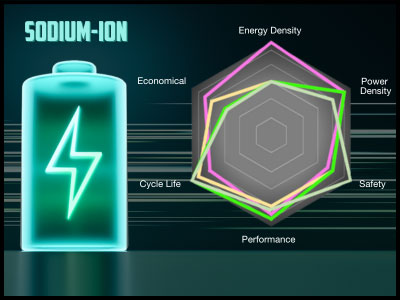
Sodium-ion battery with overlapping radar charts for various chemistries.

Sodium-Ion


Sodium-ion development was overshadowed by the commercial promise of Lithium-ion in the 1990s. Sodium-ion batteries experienced a newfound interest in the 2010s. Let’s discuss which Sodium-ion chemistries could impact the UPS industry.

Blue servers with battery icon glowing towards the center.

AI’s Influence on UPS Battery Technology


Sizing a UPS battery to accommodate the new AI load demands will become increasingly more challenging. Here we discuss the industry’s path ahead.

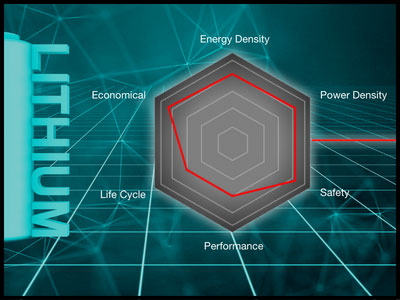
Image for Lithium-Ion chemistries blog showcasing LMO radar chart.

Exploring the Five Main Lithium-Ion Battery Chemistries for UPS Use Cases


It is extremely important to select the right lithium-ion battery chemistry for your UPS use case. Let’s dive into the five main chemistries and discuss their primary use cases.

Safety, sustainability, purchase price, and TCO checklist graphic.

How to Select the Best Battery Chemistry for UPS Battery Backup Applications


Determining the best UPS battery for your application can feel like a daunting task. Let’s take a simple approach to a few complicated metrics: Safety, Sustainability, Purchase Price, and TCO. 

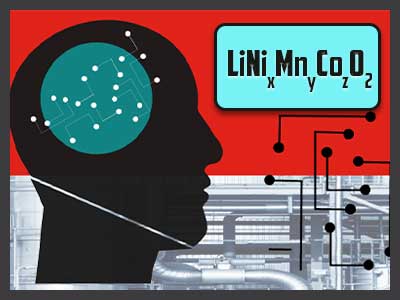
LiNi(x)Mn(y)Co(z)O(2) graphic with human head silhouette.

Lithium Nickel Manganese Cobalt Oxide (NMC)


As technology and the needs in the market changed to require an increase in energy density and cobalt-reduced NMC batteries, new variants of NMC were designed. Many of the variants had increased Nickel content and decreased Cobalt and Manganese content. 

Nickel Zinc graphic with human head silhouette.

Nickel Zinc


NiZn batteries have been around since the early 1900s, but the use of nickel hydroxide anode and zinc oxide cathode with a proprietary brand electrolyte has advanced the use of Nickel-Zinc batteries in many designs, including Uninterruptible Power Supply (UPS) systems.

Lithium iron phosphate battery graphic with human head silhouette.

Lithium Iron Phosphate (LFP)


LFP or Lithium Iron Phosphate (LiFEPO4) is a battery that typically uses a graphite or carbon electrode with a metallic backing as an anode. The cathode material, as the name implies, is typically some chemical make-up or mix of Lithium Iron Phosphate. 


Stay up-to-date on industry trends & insights

Get the critical power insights you need to keep your business from going dark.

By submitting this contact form, you agree that a representative(s) of Mitsubishi Electric Power Products, Inc. (MEPPI) may contact you using the information you provided. In accordance with our Privacy Policy, we will never share or sell your personal data.

Follow us on social media

 Black and white LinkedIn icon.   Black and white Twitter icon.  Black and white YouTube icon.